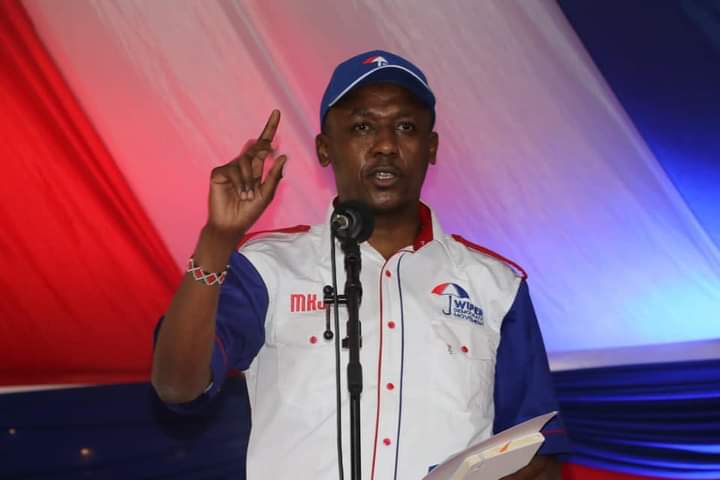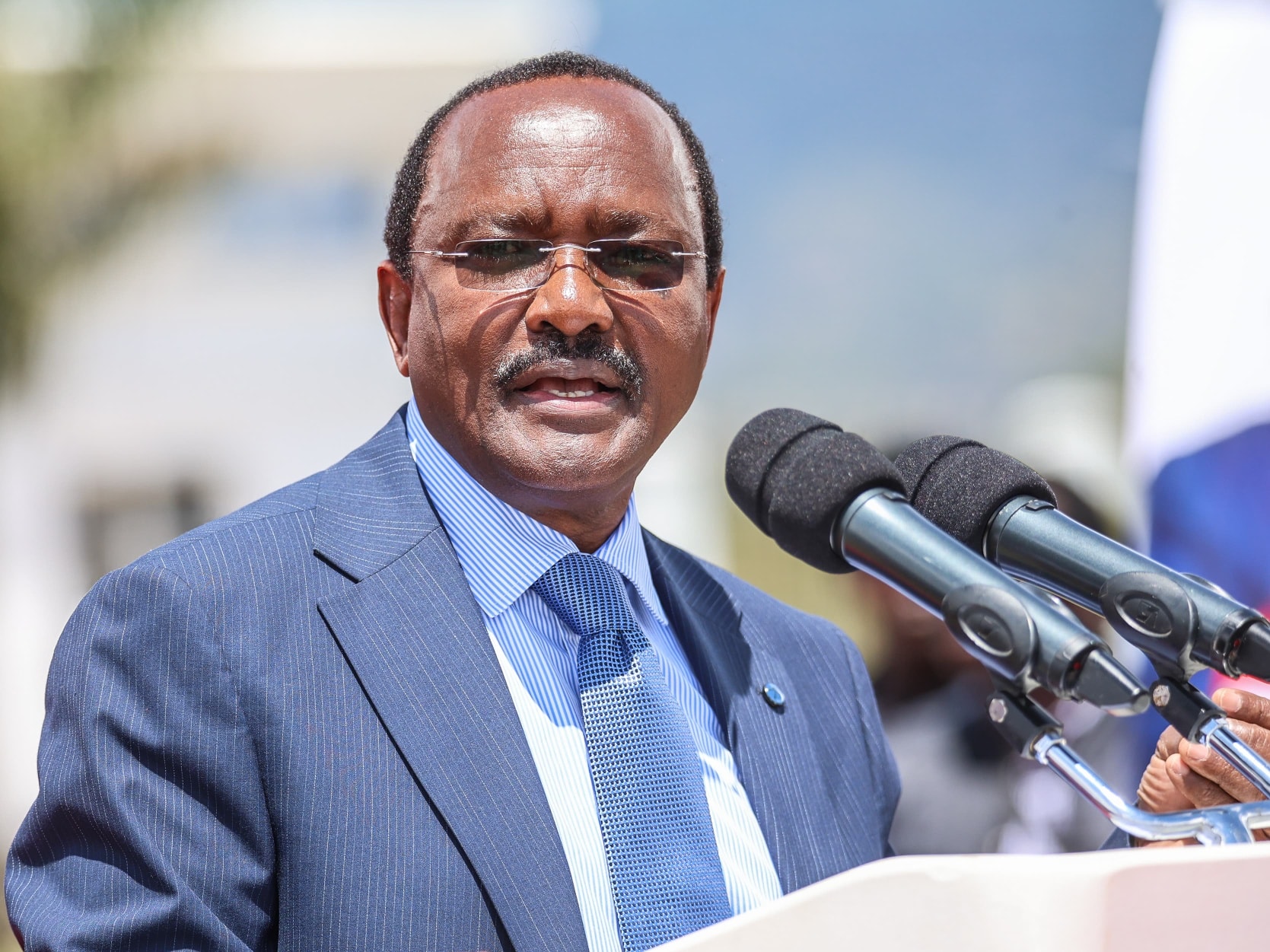
Former Vice President and Wiper Party leader Kalonzo Musyoka has hit back at President William Ruto over claims that he failed to tarmac the Tseikuru road despite being in politics for four decades, saying the President is misleading the public and politicising development issues.
Speaking during in Nairobi, Kalonzo dismissed Ruto’s remarks, arguing that his long political career represents “40 years of serious experience” rather than failure.
He accused the President of using a church service to launch political attacks instead of focusing on worship.
“He went to church on Sunday and instead of worshipping, he started attacking me,” Kalonzo said.

Kalonzo maintained that the Tseikuru road was part of a much larger regional infrastructure project that he initiated while serving as Vice President during the Kibaki administration.
He said the road corridor was designed to run from Kibwezi through Mutomo, Kitui, Mwingi, Tseikuru and Maua, extending to Isiolo and onward to Ethiopia.
“As Vice President, I launched the construction of the road from Kibwezi to Mutomo to Kitui to Mwingi to Tseikuru to Maua, to Isiolo all the way to Ethiopia. This project was supposed to connect Ethiopia to Mombasa,” Kalonzo said.
He blamed the stalling of the project on political decisions made after the Kibaki administration left office, claiming that although former President Uhuru Kenyatta wanted the project to continue, it faced resistance from his deputy at the time, William Ruto.“
“When Kibaki and I handed over power, President Uhuru Kenyatta wanted this project to continue but his deputy, Ruto, made sure the project stalled. Until now, when he is President, the project is still stalled,” Kalonzo added.
The remarks come amid rising political tensions as leaders trade blame over stalled infrastructure projects, with roads in Ukambani and other regions increasingly featuring in national political debates.